Featured

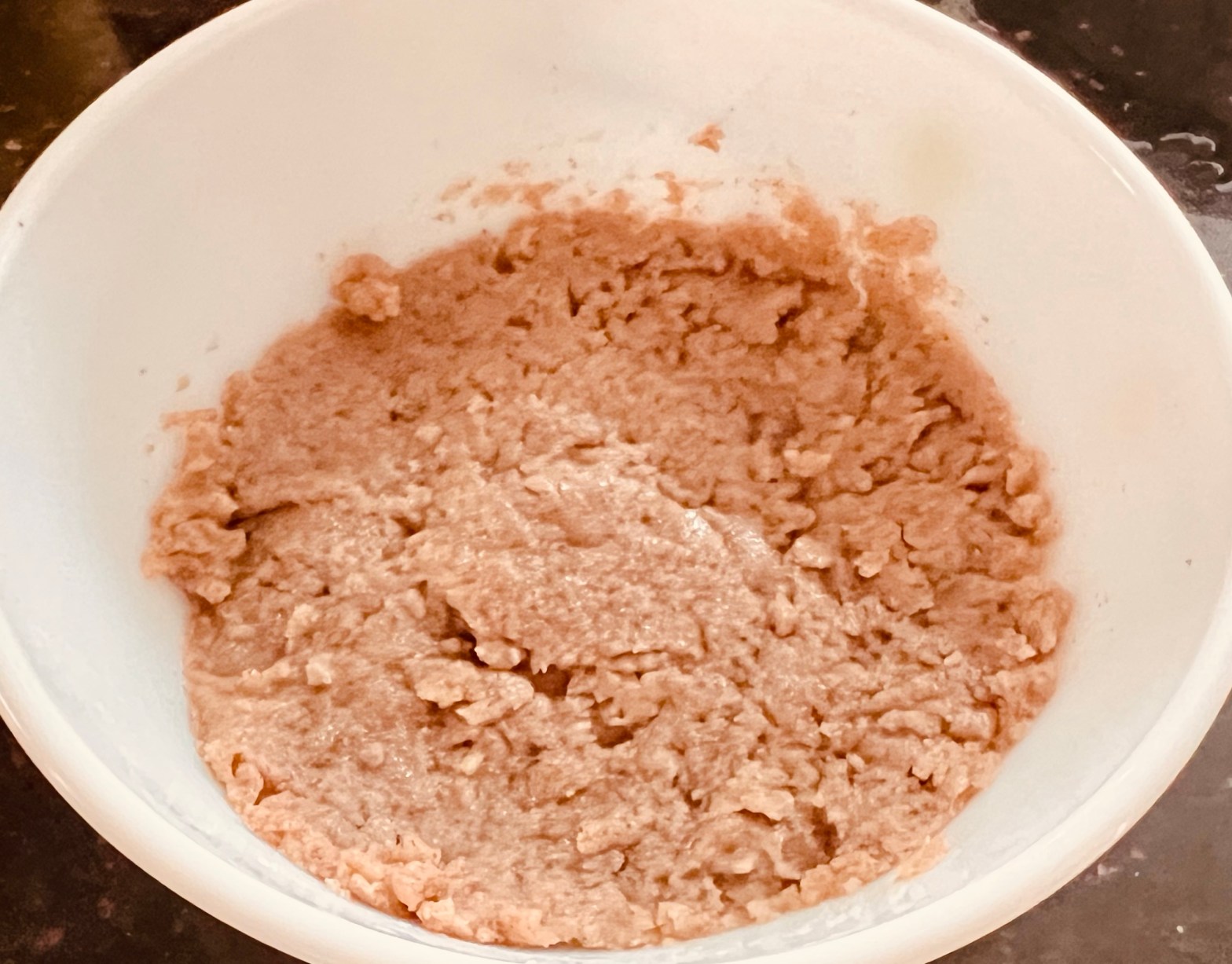
Millet Health mix (Sathu Maavu) pudding

In Southern India, there is a millet health mix called Sathu Maavu (literally translated to Health flour in Tamil), which is given to babies, toddlers and is also consumed by adults for it’s rich protein, minerals, calcium and fibre content, and it’s generally gluten free as well. Here is a link for a good brand that I buy for my kids. But it’s tricky to come up with really tasty dishes using this ingredient (it tastes healthy..iykyk 😉 )

I came up with this recipe to make it not just as a health supplement but as a really yummy dish. It’s basically a version of an Indian sweet dish called Halwa (pudding), we are using this millet health mix instead of wheat flour or any other flour that’s generally used for making this dish. You can substitute this with any millet flour as well. I have kept the sweetness level to a minimum on purpose, and it actually tastes great by letting us taste the nutty flavor or the millet health mix. Andddd, it’s toddler approved !!

So here you go – the recipe for your not so guilty dessert !

Ingredients

Millet health mix / Sathu maavu (or any millet / ragi flour)1/2 cup
Ghee (Clarified butter)3-4 tbsp
Hot Whole milk (or any milk, but hot)1 cup
Jaggery powder (palm sugar)1/4 cup
Cardamom powder1/4 tsp

Method

  1. Take a heavy bottom pan, and heat the ghee
  2. Add the millet health mix flour and roast it on low flame, for 3-4 minutes, till the mixture starts to bubble
  3. Add the jaggery powder and stir well
  4. Add the hot milk, it will all start bubbling, keep stirring on low flame till it starts to thicken and the mixture starts leaving the edges of the pan
  5. Sprinkle cardamom powder and serve it hot.
Featured

CAWD Cake

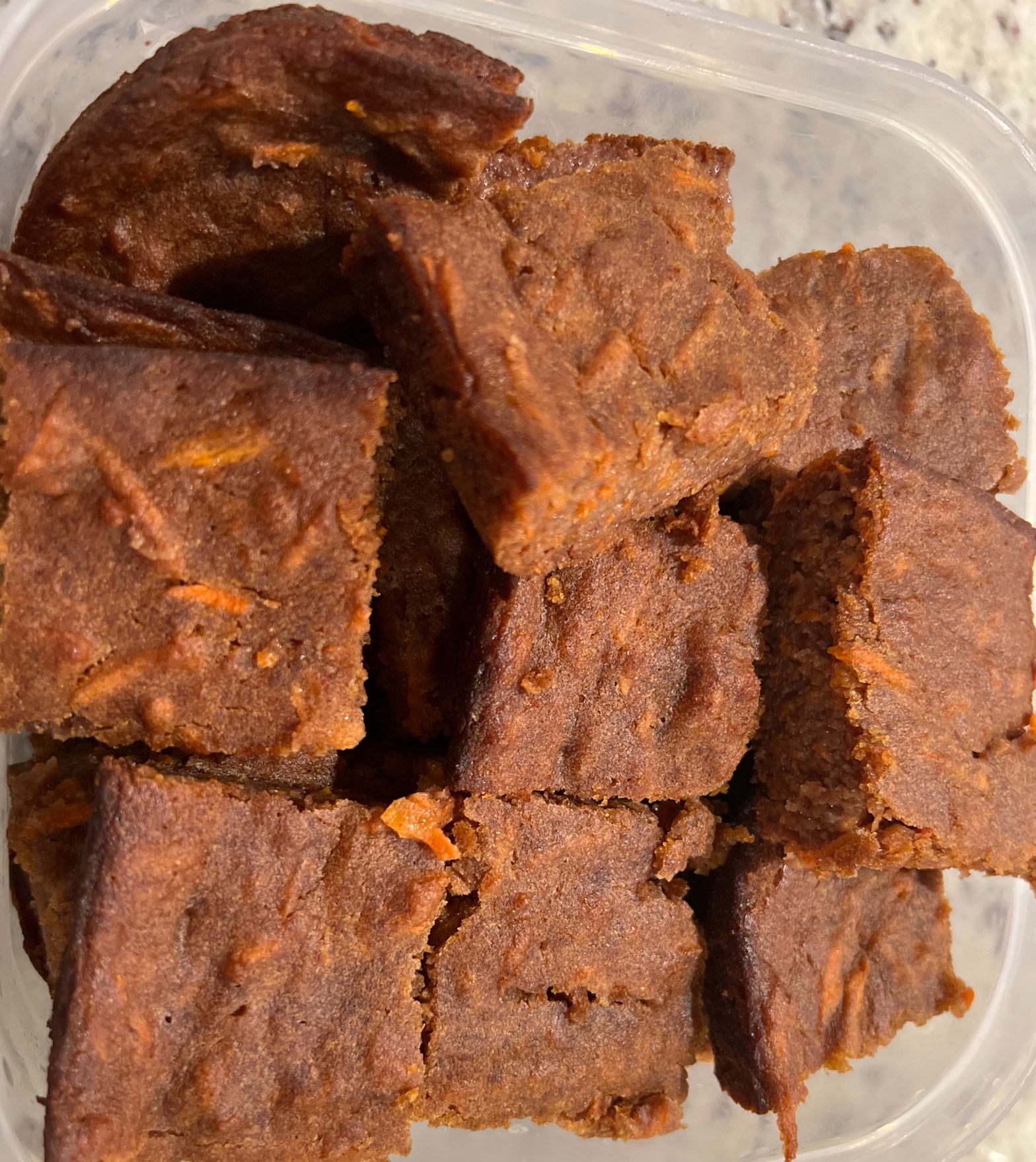
Carrot Apple Whole wheat Date Cake

I wanted to come up with a no-butter no-sugar no-white flour healthy cake (I know you next question is – how is this a cake then!) for my toddler, and this is the ultimate recipe that has become a hit – either for breakfast or for snack!

You got carrots, apples, whole wheat flour and date sugar as main ingredients – so all good stuff!

So let’s get started!

Ingredients

Whole wheat flour1 cup
Baking soda1 tsp
Salt1/4 tsp
Ground cinnamon1 tsp
Eggs2
Date powder2/3 cup
Oil (any flavorless oil)2/3 cup
Whole milk2/3 cup
Vanilla extract1 tsp
Apples (crushed / pureed)2
Carrots (grated)4 large / 5 medium

Method

  1. Preheat oven to 350 deg F
  2. Whisk together dry ingredients – whole wheat flour, baking soda, salt, ground cinnamon and date powder
  3. In another bowl, beat the eggs
  4. Add oil, milk and vanilla extract to the eggs and mix
  5. Fold in the crushed apples and grated carrots
  6. Mix the wet and dry ingredients and fill in a greased cake tray
  7. Bake for 45-50 mins (this is for a glass cake tray, timing for metal cake tray could vary)
  8. Insert a fork in centre and see if it comes clean – to check of the cake has cooked

Pattumommy’s checklist for baby essentials on Day 1 of homecoming after birth!

This checklist is to help you feel confident about all things you may need for Day 1 of when you bring your new born baby home! It’s a time to celebrate and have fun and take lots of pictures, and not frantically go to your nearest store or make an urgent Amazon order and wait by the door to get your baby needs at the last minute!

So here you go! Let’s go step by step:

Baby essentials to have on Day 1

1. Baby Crib and Mattress

Baby gets their own bed! This may need a little bit of research, based on your style, purpose and budget. The main size differences are between a standard crib, mini crib and bassinet, and their respective mattresses. But you would need this on Day 1 of bringing the baby home.

Some useful links:

Baby crib

Mini baby crib

Baby crib mattress

Mini crib mattress

2. Diaper Station, Changing pad and Diaper Essentials

Diaper changing is something you may start in the hospital itself, so you can get familiar with the process there! Essentially you would need (have added some useful links for each product) :

a. A Diaper station or a sturdy dresser table that can act as diaper station
b. Changing pad
c. Changing pad cover
d. Changing pad liners
e. Newborn diapers
f. Butt cream
g. Diaper wipes
h. Diaper wipe warmer (nice to have, not mandatory .. makes your lives so much easier when you need to change the diaper when baby is sleepy and don’t want to wake your little one up with cold diaper wipes !!)
i. Diaper pail (to easily discard used diapers)

3. Swaddle blankets or ready to use swaddle

This is another thing to be researched before your baby’s birth – whether you want to swaddle your baby or use a swaddle sleep sack! Usually a mix of two generally works.

I prefer muslin swaddle blankets for swaddle as well as just covering the stroller kinda purposes, and a swaddle sleep sack for longer sleep durations so that baby’s hips and legs are free to move.

Some useful links:

Muslin swaddle blankets: Aden + Anais

Sleep sack swaddle: Halo, Aden + Anais

4. Newborn Healthcare and Grooming kit

This includes both the healthcare essentials like digital thermometer, and other grooming essentials like comb, nail filer and clipper, medicine dispenser etc.

In addition to this, it’s always better to have a good quality rectal and forehead thermometer for babies always handy.

Some useful links:

Rectal thermometer

Forehead thermometer

Newborn grooming kit

5. Newborn hat, mittens, socks and zipper onesies

Those cute hats, mittens and socks are pretty necessary to keep the newborn warm and cozy! And the two sided zippered onesies are so easy when changing diapers, especially when you new to it!

Some useful links:

Zippered onesies

Newborn hats

Newborn mittens

Newborn socks

6. Baby Nasal Aspirator / Snot Sucker

This is an absolute must! Babies often get their delicate noses blocked and hospitals generally send you home with a bulb like syringe to remove the snot out, post delivery. But it’s a real hassle and frankly there is a better product which is way easier and convenient to use! it’s called the snot sucker (don’t worry..there’s a filter which makes sure you don’t literally end up sucking the snot by mistake!)

Here’s a useful link: Nose Frida

This comes along with the necessary spare filters and nasal saline spray that’s used to loosen the snot, but you can also but the saline spray separately here or something similar.

7. Baby bottles

This is something which we don’t know if we would need it initially..could be if you have to feed formula, or if someone other than mom is gonna feed the baby mother’s milk through bottle when mom gets some rest!

So have few baby bottles ready just in case – I highly recommend the Comotomo bottle, it generally is liked by most babies and is a safe bet – here’s the link – Comotomo

8. Sterilizer

This was something I got it late and wish I had it from day 1 ! No matter if whether you are exclusively breastfeeding or using bottles, you’ll have either the bottles and parts of breastfeeding pumping parts for wash and sanitizing. If you want to splurge somewhere, I would recommend here – saves so much time, especially when every single minute counts!

The one I recommend combines sterilizer and drier, so you don’t need to dry the parts separately, here’s the link – Baby bottle steam sterilizer and dryer

Another one for quick use which is a microwave sterilizer is here – Microwave steam sterilizer

Image source: Unsplash

Packing the hospital go-bag for your delivery

Start of the third trimester is probably the best time to pack the hospital go-bag ready, and keep it in your car trunk. Believe me, when it’s time for the delivery, it will be much smoother and less chaotic if your go-bag is ready and already in the car.

So what to pack ? Let’s divide it into 4 sections:

  • Mom
  • Baby
  • Care giver
  • Miscellaneous

The Mommy Bag

This is the main section of your go-bag. Most are for your postpartum care – be it vaginal or C-section birth. Also note, that you are going to get familiar with some previously unknown products except your mommy friends, all affordable, and that would make your postpartum period much more comfortable and help heal faster.

1. Mesh underwear

This is so important, and you will mostly get a few of those from the hospital during your stay there. These are extra large size light weight cotton under wears that could hold the extra large pads you would need for your postpartum bleeding – which is called Lochia. It’s perfectly natural – for both vaginal and C-section delivery. And regular under wears soon after delivery would be so uncomfortable. So this is an absolute must. You’ll most probably end up using these till your postpartum periods stop.

Pro tip: Ask for more before leaving the hospital, or even during your stay. Your nurses will ask you if they can get you anything, always ask for extra mesh underwear, and they will provide you with a pack of those!

Some useful links where you can buy:

2. Peri Bottle

This is another one which is a novelty for new moms, but which makes your recovery so much easier. Okay let’s get straight to the point – your vagina is gonna be sore after giving birth (duh!). But let me assure you, the fact that a lot of it is unknown / unfamiliar for first time parents is what makes us anticipate a lot of pain and discomfort. The reality is, once we have the data on timelines and procedures for each and every step of the pregnancy (the ones that are common and has been studied upon for generations), it’s not like stepping into a completely unknown universe.

So here’s some data on post-delivery vagina – it’s gonna be sore, sometimes torn and needing stitches – but all this will be done in few minutes right after the delivery and will be over before even you know it. We’ll discuss this in detail in a later post. But long story short: you know how NFL players (or any physically intense sports people for that matter) dip themselves in ice cold bath after a hard intense game ? Now imaging your vagina is that player, and the peri bottle is that cool pain relieving shower!! It’s basically a spray / squirt bottle with an angled spout that can be used to spray some “oh so relieving” cool water in the sore burning vaginal area. It also helps to keep the area clean during the postpartum heavy discharge phase ( called lochia)

Pro tip: Many hospitals provide one, so take your out only if they don’t provide it, and bring it home so you can have these at multiple rest rooms at your home.

Some useful links where you can buy:

3. Comfortable Pajamas

These are for when you want to change into something comfortable for your return back to home trip – something comfortable and loose.

4. Nipple Shield

Again, a novelty for new moms but a handy breastfeeding tool. Some babies have difficulty latching on to mothers for feeding at the beginning – both mom and baby are learning to get the feeding positions right! So sometimes, the lactation consultant may suggest a nipple shield and hospitals generally have one brand (mostly Medela) and they provide one after assessing the right size. I would advice you to do you research and carry with you multiple brands of nipple shields (eg. Medela, Mam, Nuk etc.). This is because each baby has different preference, and giving the right one (if the baby finds it difficult to latch) makes all your lives so much easier. The nurses generally don’t tell you this, and send you home with an understanding that the ones they give you are the best – NOPE. I spent a month with the nipple shield they sent and the baby latched on to me for 20 out of 24 hours, turned out the baby was not getting enough milk through the shield and changing it to one with a wider opening solved the problem magically!

So – do your research, keep multiple nipple shields on stand-by. Be prepared – you can thank me later.

Some useful links:

5. Power bars / Trail mix

You are going to be hungry – very hungry, trust me! And you would mostly not have like full regular meals when your labor has started. So, pack a whole box of power bars or trail mix or any high calorie snack you would prefer. Moreover, hospital food may not always be great, so it’s a great idea to have easy source of energy handy.

6. Nursing Pillow

This is another amazing tool to make initial breastfeeding comfortable. It’s like a specialized semi-hard pillow that wraps around the parent’s waist and provides a good height for the baby and mother to comfortably breast feed. New parents are given 100 different tips from different nurses in each shift regarding the best breastfeeding position and though it’s useful, it can be overwhelming. So nursing pillow is a great choice to have on day 1.

Some useful links when you can buy:

7. Heavy Duty Pads

This is for postpartum periods which is called lochia. You will see heavier than usual periods which is normal and will need heavy duty pads.

Some useful links to buy:

The Caregiver Bag

Power bars and snacks, comfortable pajamas to change into, notepad and a pen for quick notes, should pretty much be the minimum essentials needed for the caregiver.

The Baby Bag

1. Homecoming dress

The baby, as soon as delivered, will be wrapped in a tiny wrap around dress given by the hospital, followed by a swaddle. This pretty much the baby’s dress until ready to come home. So have couple of soft cotton onesies of 3 different sizes – newborn and 0-3 months (premie if baby is delivered premature) for baby is ready for going home!

2. Car Seat

It’s mandatory for parents to bring the infant car seat for the hospital to sign the discharge papers. So this one needs good research to pick your ideal infant car seat.

3. Muslin Swaddle

This is to to be used as a blanket for your baby in the carseat, so the they feel safe and snuggly. Cotton muslin swaddles are light, airy and breathable, so they are perfect as blankets.

Miscellaneous

1. Gifts for Nurses / Healthcare workers who helped

This was an awesome idea we got from our friends who recently had their second kid. We basically packed small gift pouches with hand lotions / shower gels / hand sanitizers (it was during pandemic), around 12-15 gift pouches and gave it to all the nurses and healthcare workers who helped us during our stay in the hospital. It’s a nice gesture and everyone loved it. It’s hard work for all the healthcare workers, especially during a pandemic, so any gesture thanking them, I think is great!

2. Toiletries

Always good to have them, instead of going in search for them in the hospital premises (especially during a pandemic)

3. IPad / Laptop / Chargers

It’s good to have some distraction in the form of reading or stealing a few minutes to watch your favorite TV show, when the baby is sleeping. Anything that’ll help you relax and have a calm mindset !

Image source: Unsplash
Formula Recall – Feb 2022: Attention Parents! Similac, Alimentum & EleCare

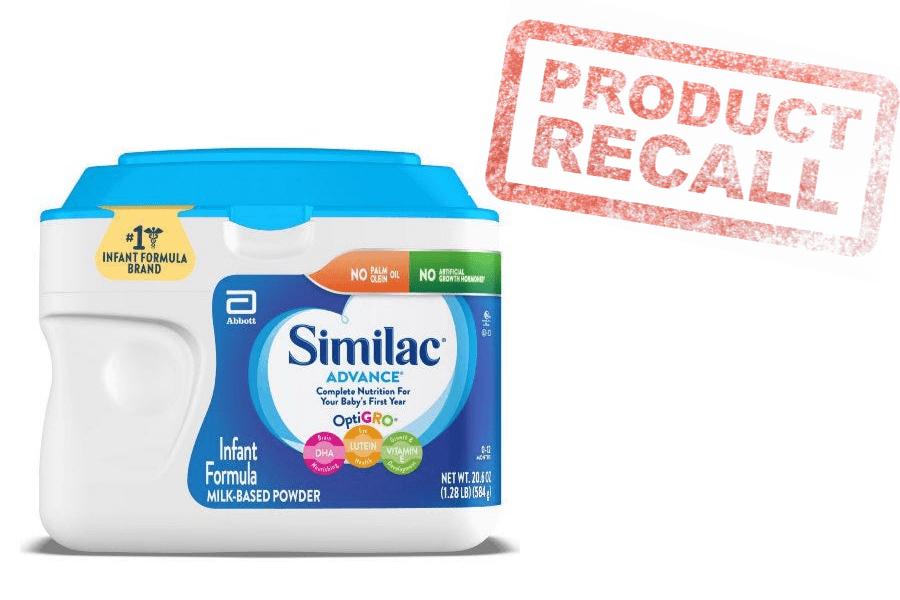
Baby formula is a primary (sometimes the only) source of nutrition for infants, and it’s very important that parents are aware of any recalls (voluntary or otherwise) related to baby food products. Abott nutrition, which is the maker of well known infant formulas has issued voluntary recall of three of their powder formulas, suspecting a possible contamination of Cronobacter sakazakii and Salmonella bacteria. The recalled products are powder infant formulas of the following brands:

  1. Similac
  2. Alimentum
  3. EleCare

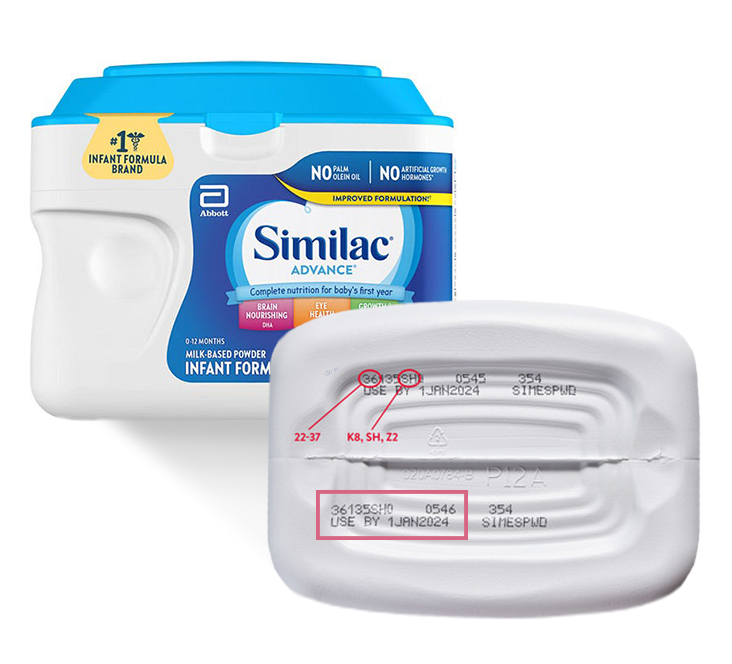
If you have bought one of these products recently (end of 2021 – beginning of 2022), look at the bottom of the container – there should be a lot number, as shown below:

Source: similacrecall.com

If the code (lot number) begins with 22 through 37, and contains either of the letter combos – K8, SH or Z2 and have an expiration date of April 1, 2022 or later, then they are part of the product recall.

You can check directly by going to https://www.similacrecall.com/us/en/product-lookup.html and following the instructions there.

And parents, if you have any doubt regarding possible consumption of the recalled formula by your baby, contact your pediatrician or health care provider. Stay safe!

Image source: https://motherhoodcommunity.com/similac-recall/

Attention! Breastfeeding – The most important yet most inaccessible topic

I wish I knew this before or during pregnancy. There is simply not enough data out there on the science of breastfeeding, in simple, practical terms. Most of the times, people rely on generational data passed from grand mothers or aunts or mothers to a new mother. Movies and videos make breastfeeding look so simple and natural, like evolution has magically prepared the mothers and babies to automatically latch like how SpaceX rockets dock on to mothership – International Space Station. Spoiler Alert – Nope, it’s not that simple (you heard that right, not as simple as rocket science).

There is no need to panic, though. A little bit of research, historical data, common sense, patience, and perseverance, would be more than enough, most of the times. Trust me- you master this, 75% of new parenting (~first 6 months) is covered. This is if you plan to exclusively breastfeed your baby for the first 5-6 months (highly recommend it, doctors do too).

First, let me explain what do nurses do immediately after you give birth. Roughly after 20 minutes of delivery, the baby is ready for it’s first every yummy mummy food, your milk. And the first milk is called colostrum, and it’s very nutritious and loaded with all the goodness necessary for the baby. It may not look like a lot of milk, but the baby seems content. Now, not all babies latch on to mummies immediately. And different nurses from different shifts will teach you different positions – football position, cradling, turn this side, that side, upside down, keep pillows etc etc..trust me, it was super crazy trying to hold the tiny baby in one hand and recollecting all the videos that you had seen in your preparation for this moment – meanwhile your partner trying to keep everything together, when the nurse is giving the family a stern look – it’s chaos.

So now- let’s try to fix this. I’m never into doing a lot of research pre-birth. I feel it could add to the stress, combined with the once in a generation pandemic. But this is one topic, I wish I had done the research pre-delivery.

Read about:

  1. Breastfeeding positions
  2. Nipple shields
  3. Breastfeeding pillow (yes, it’s a separate pillow)
  4. Pumping (Very Very important)

I’ll go into each of the above topics in detail in separate posts, but let me give you a quick summary.

Breastfeeding positions:

There are many, but I feel the regular cradling the baby position should work if done confidently. I was too nervous and wanted to be careful around the baby – and did whatever the nurses told me to do, and nurses’ shifts keep rotating and everyone has their own (very different) opinion on what’s the best way to do it. So my 2 cents – do your research, and be more confident. You and your intuition are equipped with way more than you believe (okay, this may be evolution ?!)

Nipple shields:

Now, as soon as the baby is ready to have their first feed, the lactation consultant would come in, and try guiding you to feed the baby. But if it’s not successful in the first 10 minutes – they’ll give you something called nipple shield. This is basically a silicone object that sits on the mother’s breast and acts as if an Engorgio spell (Harry Potter reference – a magical charm that engorges objects) has been cast and the nipple has been magnified so the tiny baby can latch on easily. Now the trick – hospitals will generally have a specific brand – most probably from the company called Medela – to hand it to you, and will recommend you to use it if the baby has difficulty latching on the mother. The problem – which I found out 1 month later, after the baby never got enough milk from me and was constantly hungry and the internet kept saying it’s just “cluster feeding” (google that now – tldr; it means the baby keeps feeding constantly to increase the milk supply – basic supply and demand economics). But the actual problem, which I figured after a month, was the Medela nipple shield (which has like 3 holes, to let the milk out) restricted the milk flow too much, and the baby was getting milk way too slowly, and hence constantly hungry. I mean I feel so bad that the baby had to work so hard all day long!

The moment I changed the nipple shield to a different brand – called Mam, which had a larger opening for the milk to flow through, instead of the 3 dots – it was magic, the baby started getting the right amount of milk and I started to get some sleep.

So do your research, keep a few brands of nipple shields ready in your hospital go-bag, so that you are not dependent on the one given by hospital (if at all nipple shield becomes necessary). And be confident, don’t be afraid to ask questions.

Breastfeeding pillow:

Ah the brestfriend (it’s an actual product – here) – this is way better than positioning the baby with the help of 27 pillows – trust me, they are tiny! Buy this and get it to the hospital, you will thank me.

Pumping:

And the most important topic of this post – If you are a working professional, and plan on going back to work after your parental leave – you need milk stash. I made the mistake of thinking – “I’m gonna work from home, so I would not need to pump and store milk, will do that if and when needed” – Nope! You are going to have work related stuff, and home related stuff. Someone other than the mother should be able to feed the baby with mother’s milk from bottle. Pump from week 1. Go home, set up the machine – and this is tricky – first time parents (including me and my partner) get so flustered looking at the complex setup of pumping machine. Persevere – it looks tricky, but after a couple of times, you get the hang of it. And remember – most health insurance companies provide one for free – so talk to your health insurance company before delivery, and have the set up ready. You will thank me when your partner or family member is feeding the baby at night and your are reading a book in your bed, ready to sleep.

To recap – do your research on:

  • Breastfeeding positions
  • Nipple shields
  • Breastfeeding pillow
  • Pumping machine

Step 1 – Get a Gynecologist!

You may be surprised how many women actually don’t have regular checkups with a gynecologist. It’s definitely better to have a gynecologist you are already comfortable with, before planning a pregnancy (if it’s a planned one). It took a couple of try’s for me to find the right one, and he had a 3 month waiting period at that time for seeing new patients. So I highly recommend doing your research and finding the right doctor sooner rather than later.

Your gynecologist is going to be constantly present throughout your pregnancy – like you are going to be meeting them starting from every month to every two weeks to every week as your pregnancy progresses. In fact, during my pregnancy which was during peak pandemic, visit to my gynecologist was the only outing I ever had! Get comfortable, and expect to make that visit regularly during your pregnancy (even during pandemic). So I feel, having a gynecologist is a very important pre-requisite to get things started smoothly.

During the pandemic, the gynecologist visits seemed a little different – no partners or family/ friends were allowed during the regular checkups during pregnancy – just the patient was allowed (yes – the whole time). So I had a go-bag ready for every visit – with masks, gloves, hand sanitizers and water bottle.

Introducing Pattu Mommy

Pregnancy in itself is stressful. I get it. Pandemic pregnancy sounds out of the world! I’m here to tell you – Relax! You can do it. Yes, it’s little bit more work and planning, but it’s nothing to panic about.

There are tons of literature out there, but as always, when it comes to health related topics, googling stuff leads to rabbit holes of stressful data, half accurate and most of them dispersing incomplete vague data. Internet search on pregnancy related topics is just super stressful. I don’t recommend it. So what then ? I feel there’s a huge untapped industry that could cater to expecting parents – simply like an expert system that would answer all our silly to very serious questions. A very few like Alexis Ohanian’s Venture Capital firm 776 have recently invested in some amazing women’s health startups, but we need more. It’s absolutely crazy why such a crucial necessity to mankind has gotten so few minds dedicated to its research and development.

I’m not promising you that the information you find here is accurate or expert tested. Pattu Mommy is just an effort to distill all the information I got from various sources, into a simple, digestable format – mainly removing all the clutter.