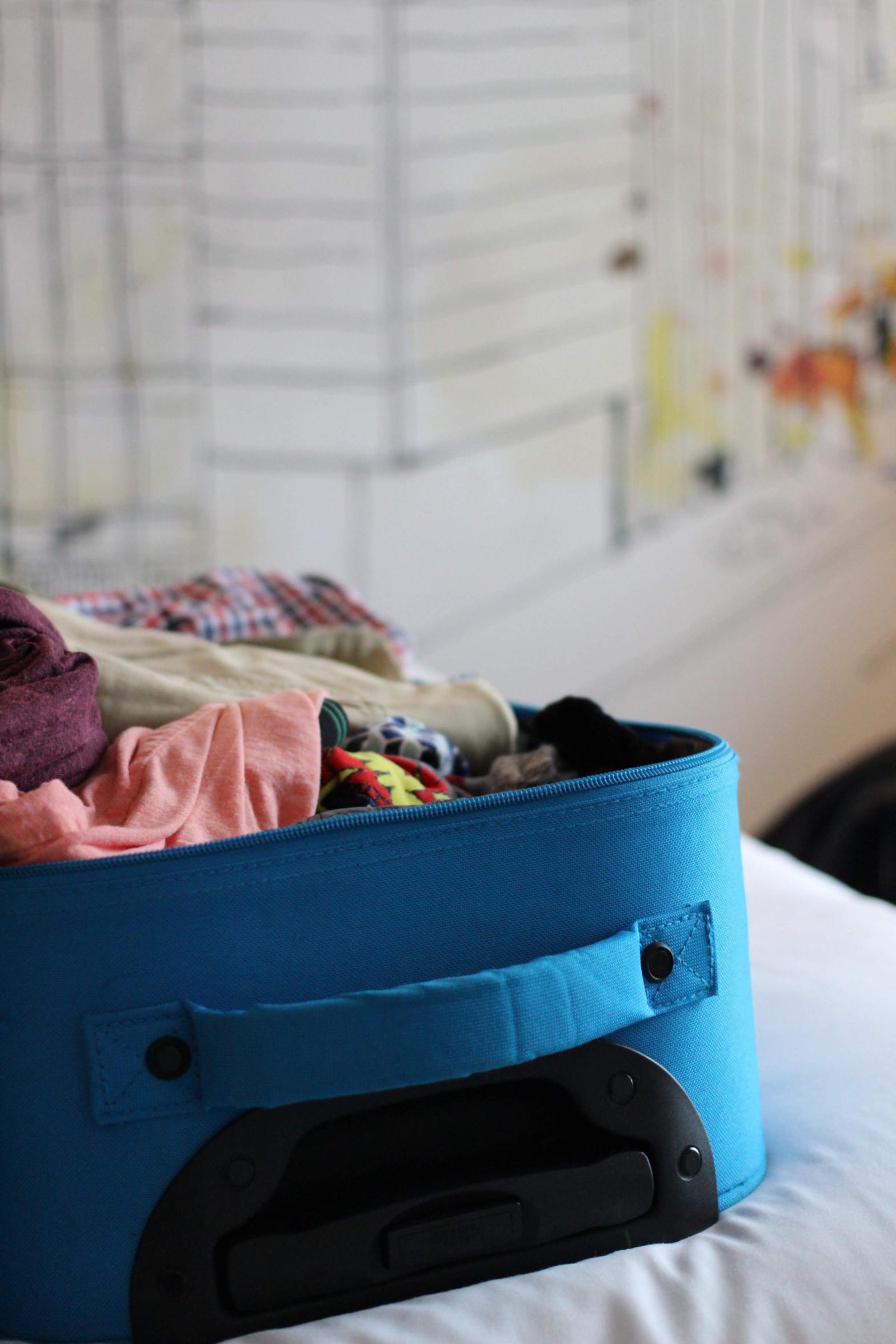
Start of the third trimester is probably the best time to pack the hospital go-bag ready, and keep it in your car trunk. Believe me, when it’s time for the delivery, it will be much smoother and less chaotic if your go-bag is ready and already in the car.
So what to pack ? Let’s divide it into 4 sections:
- Mom
- Baby
- Care giver
- Miscellaneous
The Mommy Bag
This is the main section of your go-bag. Most are for your postpartum care – be it vaginal or C-section birth. Also note, that you are going to get familiar with some previously unknown products except your mommy friends, all affordable, and that would make your postpartum period much more comfortable and help heal faster.
1. Mesh underwear
This is so important, and you will mostly get a few of those from the hospital during your stay there. These are extra large size light weight cotton under wears that could hold the extra large pads you would need for your postpartum bleeding – which is called Lochia. It’s perfectly natural – for both vaginal and C-section delivery. And regular under wears soon after delivery would be so uncomfortable. So this is an absolute must. You’ll most probably end up using these till your postpartum periods stop.
Pro tip: Ask for more before leaving the hospital, or even during your stay. Your nurses will ask you if they can get you anything, always ask for extra mesh underwear, and they will provide you with a pack of those!
Some useful links where you can buy:
- https://www.amazon.com/Postpartum-Underwear-Disposable-C-Section-Maternity/dp/B07CN5LB9C
- https://www.amazon.com/Disposable-Postpartum-Underwear-Breathable-Latex-Free/dp/B07THFQS6Y
2. Peri Bottle
This is another one which is a novelty for new moms, but which makes your recovery so much easier. Okay let’s get straight to the point – your vagina is gonna be sore after giving birth (duh!). But let me assure you, the fact that a lot of it is unknown / unfamiliar for first time parents is what makes us anticipate a lot of pain and discomfort. The reality is, once we have the data on timelines and procedures for each and every step of the pregnancy (the ones that are common and has been studied upon for generations), it’s not like stepping into a completely unknown universe.
So here’s some data on post-delivery vagina – it’s gonna be sore, sometimes torn and needing stitches – but all this will be done in few minutes right after the delivery and will be over before even you know it. We’ll discuss this in detail in a later post. But long story short: you know how NFL players (or any physically intense sports people for that matter) dip themselves in ice cold bath after a hard intense game ? Now imaging your vagina is that player, and the peri bottle is that cool pain relieving shower!! It’s basically a spray / squirt bottle with an angled spout that can be used to spray some “oh so relieving” cool water in the sore burning vaginal area. It also helps to keep the area clean during the postpartum heavy discharge phase ( called lochia)
Pro tip: Many hospitals provide one, so take your out only if they don’t provide it, and bring it home so you can have these at multiple rest rooms at your home.
Some useful links where you can buy:
- https://www.amazon.com/Postpartum-Essentials-Portable-Perineal-Nozzles/dp/B08BYQVDPF
- https://www.amazon.com/Peri-Bottle-Postpartum-Portable-Bidet/dp/B089ZW9GYL
- https://www.amazon.com/Postpartum-Original-Fridababy-MomWasher-Cleansing/dp/B07TXLZ8MR
3. Comfortable Pajamas
These are for when you want to change into something comfortable for your return back to home trip – something comfortable and loose.
4. Nipple Shield
Again, a novelty for new moms but a handy breastfeeding tool. Some babies have difficulty latching on to mothers for feeding at the beginning – both mom and baby are learning to get the feeding positions right! So sometimes, the lactation consultant may suggest a nipple shield and hospitals generally have one brand (mostly Medela) and they provide one after assessing the right size. I would advice you to do you research and carry with you multiple brands of nipple shields (eg. Medela, Mam, Nuk etc.). This is because each baby has different preference, and giving the right one (if the baby finds it difficult to latch) makes all your lives so much easier. The nurses generally don’t tell you this, and send you home with an understanding that the ones they give you are the best – NOPE. I spent a month with the nipple shield they sent and the baby latched on to me for 20 out of 24 hours, turned out the baby was not getting enough milk through the shield and changing it to one with a wider opening solved the problem magically!
So – do your research, keep multiple nipple shields on stand-by. Be prepared – you can thank me later.
Some useful links:
- https://www.amazon.com/Medela-Available-Different-Versions-Hospitals/dp/B077962FZH
- https://www.amazon.com/MAM-Breastfeeding-Shields-Sterilizing-Storage/dp/B07Z4BWDTH
- https://www.amazon.com/Lansinoh-Contact-Nipple-Shield-Carrying/dp/B0781VNCDZ
5. Power bars / Trail mix
You are going to be hungry – very hungry, trust me! And you would mostly not have like full regular meals when your labor has started. So, pack a whole box of power bars or trail mix or any high calorie snack you would prefer. Moreover, hospital food may not always be great, so it’s a great idea to have easy source of energy handy.
6. Nursing Pillow
This is another amazing tool to make initial breastfeeding comfortable. It’s like a specialized semi-hard pillow that wraps around the parent’s waist and provides a good height for the baby and mother to comfortably breast feed. New parents are given 100 different tips from different nurses in each shift regarding the best breastfeeding position and though it’s useful, it can be overwhelming. So nursing pillow is a great choice to have on day 1.
Some useful links when you can buy:
- https://www.amazon.com/My-Brest-Friend-Original-Fireworks/dp/B003TSDMH8
- https://www.amazon.com/Boppy-Nursing-Pillow-Positioner-Naked/dp/B000KW5I6E
7. Heavy Duty Pads
This is for postpartum periods which is called lochia. You will see heavier than usual periods which is normal and will need heavy duty pads.
Some useful links to buy:
The Caregiver Bag
Power bars and snacks, comfortable pajamas to change into, notepad and a pen for quick notes, should pretty much be the minimum essentials needed for the caregiver.
The Baby Bag
1. Homecoming dress
The baby, as soon as delivered, will be wrapped in a tiny wrap around dress given by the hospital, followed by a swaddle. This pretty much the baby’s dress until ready to come home. So have couple of soft cotton onesies of 3 different sizes – newborn and 0-3 months (premie if baby is delivered premature) for baby is ready for going home!
2. Car Seat
It’s mandatory for parents to bring the infant car seat for the hospital to sign the discharge papers. So this one needs good research to pick your ideal infant car seat.
3. Muslin Swaddle
This is to to be used as a blanket for your baby in the carseat, so the they feel safe and snuggly. Cotton muslin swaddles are light, airy and breathable, so they are perfect as blankets.
Miscellaneous
1. Gifts for Nurses / Healthcare workers who helped
This was an awesome idea we got from our friends who recently had their second kid. We basically packed small gift pouches with hand lotions / shower gels / hand sanitizers (it was during pandemic), around 12-15 gift pouches and gave it to all the nurses and healthcare workers who helped us during our stay in the hospital. It’s a nice gesture and everyone loved it. It’s hard work for all the healthcare workers, especially during a pandemic, so any gesture thanking them, I think is great!
2. Toiletries
Always good to have them, instead of going in search for them in the hospital premises (especially during a pandemic)
3. IPad / Laptop / Chargers
It’s good to have some distraction in the form of reading or stealing a few minutes to watch your favorite TV show, when the baby is sleeping. Anything that’ll help you relax and have a calm mindset !
Image source: Unsplash



 Pattu Mommy